
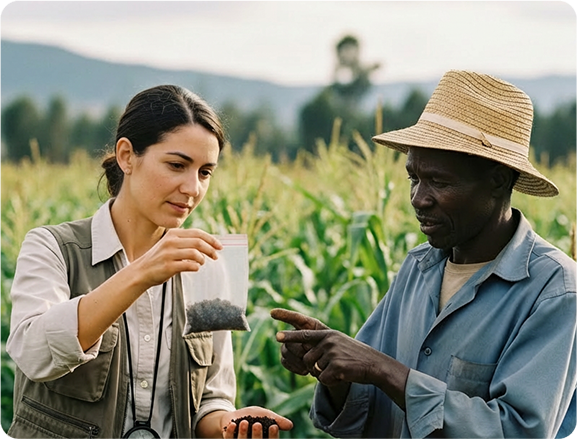
Everything you need to know about biochar: what it is, how it’s made, and why it’s transforming agriculture and climate action.
Introduction
Beneath the Amazon rainforest, scientists discovered something remarkable: patches of incredibly fertile, dark soil that had sustained agriculture for thousands of years. This “terra preta” (Portuguese for “black earth”) held a secret that modern agriculture is only now rediscovering—biochar.
Biochar is a carbon-rich material that improves soil health, boosts crop yields, and locks away carbon for centuries. It’s not new technology; it’s ancient wisdom meeting modern science. And for farmers, gardeners, and anyone concerned about sustainable agriculture, understanding biochar could change how you think about soil forever.
This guide covers everything you need to know: what biochar actually is, how it differs from charcoal, how it’s made, its proven benefits, and how to use it effectively.
What is Biochar?
Biochar is a stable, carbon-rich form of charcoal produced specifically for use as a soil amendment. It’s created through a process called pyrolysis—heating organic material (biomass) in the absence of oxygen.
The keyword here is “stable.” Unlike regular organic matter that decomposes within years, biochar can persist in soil for hundreds to thousands of years. This stability is what makes biochar so valuable for both agriculture and climate action.
At its core, biochar is essentially pure carbon locked into a highly porous structure. When organic matter like wood, crop residues, or other plant material is heated to high temperatures without oxygen, the volatile components are driven off as gases, leaving behind a lightweight, black, honeycomb-like material that resists decomposition.
The Technical Definition
Biochar is defined by the International Biochar Initiative as:
“A solid material obtained from the thermochemical conversion of biomass in an oxygen-limited environment.”
In simpler terms: you take plant material, heat it without burning it, and create a porous, carbon-rich substance that acts like a permanent soil improver.
The distinction between biochar and other forms of black carbon lies primarily in its intended use. Biochar is made specifically for application to soil, with production parameters optimised for agricultural benefit rather than energy production or filtration.
What Makes Biochar Special?
Under a microscope, biochar reveals its secret: an incredibly porous structure with massive surface area. A single gram of biochar can have a surface area equivalent to a football field. This porosity allows biochar to:
- Hold water like a sponge, releasing it slowly to plant roots
- Retain nutrients that would otherwise wash away through leaching
- Provide habitat for beneficial soil microorganisms
- Remain stable in soil for centuries, resisting decomposition
The chemical structure of biochar includes aromatic carbon rings—the same stable molecular arrangements found in graphite. These rings resist breakdown by microorganisms and chemical processes, explaining biochar’s remarkable persistence in soil.
Additionally, biochar’s surface chemistry allows it to interact with nutrients in soil. The functional groups on biochar surfaces can hold positively charged nutrients like potassium, calcium, and magnesium, preventing them from washing away and keeping them available for plants.
Types of Biochar
Not all biochar is identical. Properties vary based on:
Feedstock: Wood-based biochar typically has higher carbon content (80-90%), while biochar from agricultural residues may contain more ash and minerals. Manure-based biochar contributes additional nutrients.
Temperature: Higher pyrolysis temperatures (above 600°C) produce biochar with more surface area and higher carbon content. Lower temperatures (350-500°C) preserve more functional groups for nutrient retention.
Production time: Faster pyrolysis produces different properties than slow pyrolysis, affecting pore structure and surface chemistry.
Understanding these variations helps in selecting the right biochar for specific applications—there’s no single “best” biochar, only the most appropriate for your needs.
The History of Biochar: From Terra Preta to Modern Agriculture
Ancient Origins
The story of biochar begins in the Amazon basin, where indigenous peoples created some of the most fertile soil on Earth. Terra preta soils, found throughout the Amazon, contain high concentrations of charcoal mixed with organic matter, bone, and pottery fragments.
These soils were created intentionally over centuries, possibly millennia. Unlike the surrounding nutrient-poor tropical soils, terra preta remains fertile to this day—thousands of years after it was last cultivated. This persistence caught the attention of soil scientists in the late 20th century.
The indigenous peoples of the Amazon developed sophisticated agricultural systems that transformed notoriously infertile tropical soils into highly productive land. Their techniques included adding charcoal from cooking fires, food waste, animal bones, and broken pottery to the soil over generations.
What makes terra preta remarkable is not just its fertility but its resilience. While the surrounding oxisols (typical tropical soils) are quickly depleted by agriculture and erosion, terra preta patches have maintained their productivity for centuries after being abandoned. Some estimates suggest these soils are 10 times more productive than unimproved tropical soils.
The Scientific Discovery
Scientists first documented terra preta in the late 1800s, but it wasn’t until the 1990s and 2000s that researchers began investigating its secrets seriously. Key discoveries included:
1999-2003: Research teams identified charcoal as the critical component of terra preta’s lasting fertility. Unlike other organic matter that decomposes rapidly in tropical climates, the charcoal remained stable and continued providing benefits.
2006: The term “biochar” was coined to distinguish charcoal intended for soil amendment from charcoal intended for fuel. This marked the beginning of biochar as a distinct field of research.
2007-2010: Global research expanded rapidly. Scientists conducted thousands of trials across different climates, soil types, and crops. The International Biochar Initiative was founded to coordinate research and standards.
Modern Rediscovery
In the 1990s and 2000s, researchers began studying terra preta intensively. They discovered that the charcoal component was key to the soil’s remarkable fertility and longevity. This sparked a global research effort into what we now call biochar.
Today, biochar is produced and used on every continent. It’s backed by thousands of peer-reviewed studies and recognised by organisations including the Intergovernmental Panel on Climate Change (IPCC) as a legitimate carbon removal technology.
The modern biochar industry has grown from scientific curiosity to commercial reality. Companies now produce biochar at an industrial scale, while farmers from California to Kenya to Australia have incorporated it into their soil management practices.
How Biochar is Made: The Pyrolysis Process
Understanding Pyrolysis
Pyrolysis is thermal decomposition in the absence of oxygen. When you heat biomass without letting it burn, it breaks down into three products:
- Biochar (solid) — the carbon-rich residue
- Bio-oil (liquid) — condensable gases
- Syngas (gas) — non-condensable gases
The temperature, heating rate, and duration of pyrolysis determine the properties of the resulting biochar. Generally, higher temperatures produce biochar with more surface area and higher carbon content.
Feedstocks: What Biochar is Made From
Biochar can be produced from virtually any organic material:
- Agricultural residues: crop stalks, husks, shells
- Forestry waste: wood chips, sawdust, bark
- Green waste: prunings, garden waste
- Animal waste: manure, bone
- Dedicated crops: fast-growing trees, grasses
The feedstock affects the biochar’s properties. Wood-based biochar typically has higher carbon content, while biochar from manure may contain more nutrients.
Production Methods
Small-scale production uses simple kilns or retorts, suitable for farms and communities. These range from basic pit kilns to more sophisticated cone kilns and drum retorts.
Industrial production uses continuous pyrolysis systems that can process tonnes of biomass per hour. These systems often capture the bio-oil and syngas for energy, making the process carbon-negative.
At B10, we use controlled pyrolysis of waste biomass—turning agricultural residues into high-quality biochar while creating employment in rural communities. Our process ensures consistent quality and optimal properties for soil application.
Biochar vs Charcoal vs Activated Carbon: Key Differences
These three materials are often confused, but they serve different purposes:
Charcoal
- Purpose: Fuel for cooking and heating
- Production: Slow burning of wood with limited oxygen
- Properties: Optimised for energy release when burned
- Soil use: Not recommended—may contain harmful compounds
Biochar
- Purpose: Soil amendment and carbon sequestration
- Production: Controlled pyrolysis at specific temperatures
- Properties: Optimised for porosity, stability, and soil benefits
- Soil use: Specifically designed for agricultural application
Activated Carbon
- Purpose: Filtration and purification
- Production: Further processed (activated) after pyrolysis
- Properties: Extremely high surface area for adsorption
- Soil use: Too expensive; not necessary for soil benefits
The key difference is intent and optimisation. Biochar is produced specifically to benefit soil, with properties tailored for agricultural use.
Important: Don’t use BBQ charcoal in your garden. It may contain additive compounds and isn’t optimised for soil health. Purpose-made biochar is worth the investment.
The Benefits of Biochar
Research from around the world has documented biochar’s benefits. Here are the most significant:
1. Improved Water Retention
Biochar’s porous structure holds water like a sponge, then releases it slowly to plant roots. Studies show biochar can increase soil water-holding capacity by 20% or more. This is particularly valuable in:
- Drought-prone regions where water is scarce
- Sandy soils that drain too quickly to support plant growth
- Areas with irregular rainfall patterns
- Irrigated systems where water efficiency matters
Research from Australia, a continent familiar with drought, has shown biochar-amended soils require 15-25% less irrigation water while maintaining equivalent crop performance. For farmers facing water restrictions or rising water costs, this translates directly to improved viability.
2. Enhanced Nutrient Retention
Biochar has a high cation exchange capacity (CEC), meaning it holds onto positively charged nutrients like potassium, calcium, and magnesium. This prevents nutrients from leaching away and keeps them available for plants.
The mechanism works like this: biochar’s surface carries negative electrical charges that attract and hold positively charged nutrient ions. When plant roots release hydrogen ions in exchange for nutrients, the biochar releases its held nutrients into the soil solution.
Research shows biochar can reduce fertiliser requirements by 10-30% while maintaining or improving yields. In trials across multiple crops and regions, farmers have achieved equivalent yields with 20% less applied fertiliser when using biochar.
3. Boosted Soil Biology
The porous structure of biochar provides habitat for beneficial microorganisms. Bacteria, fungi, and other soil life colonise biochar particles, creating thriving microbial communities.
Within biochar’s pores, microorganisms find: – Protection from predators (protozoa and nematodes are too large to enter small pores) – Stable moisture and temperature conditions – Access to nutrients adsorbed on biochar surfaces – Connection to the broader soil ecosystem
This enhanced soil biology improves: – Nutrient cycling—microbes convert organic nutrients to plant-available forms – Disease suppression—beneficial organisms outcompete pathogens – Soil structure—microbial products bind soil particles into aggregates – Plant health—mycorrhizal fungi extend effective root systems
Research indicates biochar-amended soils can contain 20-40% higher microbial biomass compared to untreated soils, with particularly strong increases in beneficial fungal populations.
4. Carbon Sequestration
Unlike organic matter that decomposes and releases CO₂, biochar locks carbon in a stable form for centuries. Every tonne of biochar applied to soil represents roughly 2.5-3 tonnes of CO₂ removed from the atmosphere.
The mathematics work like this: plants are approximately 50% carbon by dry weight. That carbon came from atmospheric CO₂ during photosynthesis. When plant material is converted to biochar, roughly 50% of that carbon is preserved in stable form. The molecular weight ratio between CO₂ and carbon means each unit of carbon stabilised represents 3.67 units of CO₂ removed from the atmosphere.
This makes biochar one of the few agricultural practices that is genuinely carbon-negative—it removes more carbon from the atmosphere than the entire production and application process releases.
5. Improved Soil Structure
Biochar helps soil particles aggregate, improving soil structure. This leads to: – Better root penetration, allowing crops to access water and nutrients at depth – Improved drainage in clay soils that tend toward waterlogging – Reduced compaction from machinery and foot traffic – Enhanced aeration, ensuring roots receive adequate oxygen
6. pH Balancing
Most biochar is slightly alkaline, which can help neutralise acidic soils. This liming effect reduces the need for agricultural lime in many applications. Biochar’s pH typically ranges from 7 to 10, depending on feedstock and production conditions.
How to Use Biochar
Application Rates
General guidelines for biochar application:
| Application | Rate | Notes |
| Gardens | 5-10% by volume | Mix into top 15-20cm |
| Field crops | 1-5 tonnes/hectare | Incorporate before planting |
| Potting mixes | 10-20% by volume | Blend thoroughly |
| Compost | 10-20% by volume | Add during composting |
The Importance of Charging
Raw biochar should be “charged” before application. Charging means saturating the biochar with nutrients and beneficial microorganisms. Uncharged biochar can temporarily reduce nutrient availability as it absorbs nutrients from the soil.
Charging methods: – Mix with compost for 2-4 weeks – Soak in diluted liquid fertiliser – Blend with worm castings – Add to actively composting material
Or choose pre-charged biochar: Products like B10’s pre-charged biochar come ready to use, eliminating the charging step and ensuring immediate benefits.
Application Methods
Surface application: Spread biochar on the soil surface and incorporate it with light tillage or let earthworms work it in over time.
Incorporation: Mix biochar into the root zone during soil preparation. This is the most effective method for immediate benefits.
Banding: Apply biochar in rows or bands where crops will be planted.
Compost blending: Add biochar to your compost pile. The composting process charges the biochar while improving compost quality.
Biochar and Climate Change
The Carbon Negative Opportunity
Agriculture is often part of the climate problem. Biochar offers a way to make it part of the solution.
When plants grow, they absorb CO₂ from the atmosphere. Normally, when plants die and decompose, that carbon returns to the atmosphere. Biochar interrupts this cycle by converting plant carbon into a stable form that persists for centuries.
The IPCC recognises biochar as a legitimate negative emissions technology with the potential to remove 0.5-2 gigatonnes of CO₂ per year by 2050.
Carbon Credits
Biochar carbon removal is now certified by organisations including Puro.earth and other carbon credit registries. This creates economic incentives for biochar production and opens new revenue streams for farmers.
Getting Started with Biochar
For Gardeners
- Start small—try biochar in one bed and compare results
- Use pre-charged biochar for best results
- Apply at 5-10% by volume, mixed into the root zone
- Water well after application
- Observe and adjust in subsequent seasons
For Farmers
- Consider a trial plot before large-scale application
- Calculate application rates based on soil type and crops
- Source quality biochar with known specifications
- Factor in charging requirements or choose pre-charged products
- Monitor soil health and yields over multiple seasons
Choosing Quality Biochar
Look for biochar that: – Has documented production parameters – Shows high carbon content (>70%) – Has appropriate pH for your soil – Comes from clean feedstocks – Ideally is pre-charged and ready to use
Conclusion
Biochar represents a convergence of ancient wisdom and modern science. It offers a rare win-win-win: better soil health, improved crop performance, and genuine climate benefits.
Whether you’re a home gardener looking to improve your vegetable beds or a commercial farmer seeking sustainable soil management, biochar deserves serious consideration.
The technology is proven. The benefits are documented. The only question is: when will you start?
Ready to try biochar? B10 produces premium, pre-charged biochar in Mpumalanga, South Africa. Our biochar is made from waste biomass, creating jobs while capturing carbon. Contact us to learn more or shop our products.
Related Articles: – 10 Proven Benefits of Biochar for Your Soil – How to Use Biochar in Your Garden – Biochar vs Charcoal: What’s the Difference?
Last updated: January 2026
